
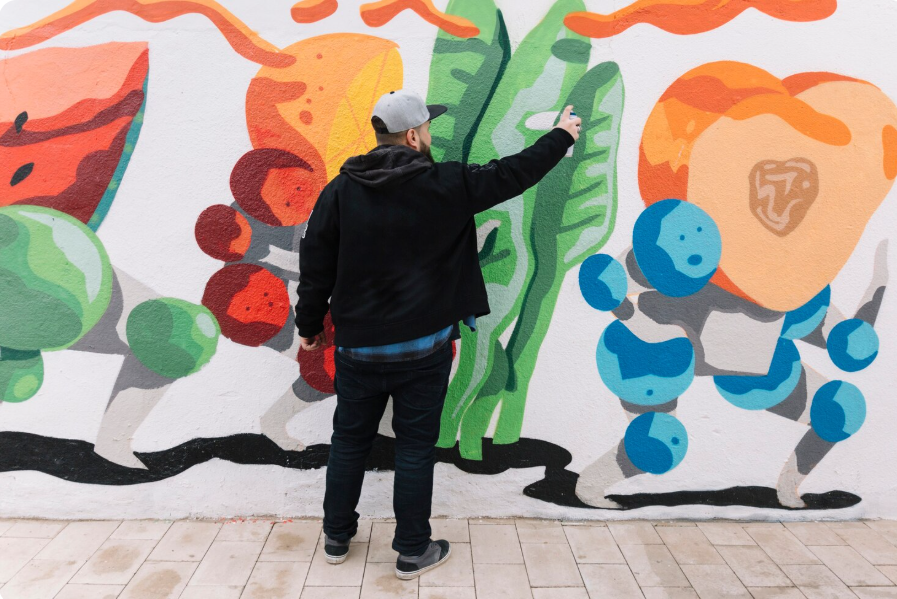
Street art has undergone a remarkable transformation over the past several decades. Once associated mainly with unauthorized graffiti, underground communities, and overlooked urban spaces, it has increasingly found a place inside respected galleries, museums, private collections, and international art fairs.
For many street artists, moving from walls to galleries represents more than a change of location. It requires adapting their creative process, establishing a professional identity, understanding the commercial art world, and finding ways to preserve the authenticity that originally made their work distinctive.
The journey from graffiti to fine art is therefore both a creative and professional transition.
The Origins of Street Art Culture
Modern graffiti culture gained significant attention during the late twentieth century, particularly in large cities where artists used walls, trains, bridges, and abandoned buildings as their canvases. Tags, elaborate lettering, murals, stencils, and political imagery became recognizable forms of urban expression.
Unlike traditional artists who often worked inside studios, street artists created work directly within public environments.
The surrounding architecture became part of the artwork itself.
A mural painted on an aging warehouse, for example, could communicate something very different from the same image displayed on a clean gallery wall. Location, neighborhood history, social conditions, and public interaction often contributed to the meaning of street art.
This connection with the environment remains one of the defining qualities of the movement.
Recognition Changes the Perception of Street Art
As street art became more sophisticated and visible, attitudes toward it began changing.
Large murals started appearing through officially commissioned public art programs. Businesses invited artists to decorate buildings, while local governments increasingly recognized murals as tools for cultural development and neighborhood revitalization.
Social media also helped street artists reach audiences far beyond the streets where their work appeared.
An artist who once depended on pedestrians discovering a mural could suddenly share photographs of the artwork with thousands or even millions of people worldwide.
This increased visibility gave curators, collectors, galleries, and brands easier access to emerging artists.
As recognition expanded, some street artists began receiving invitations to participate in exhibitions.
Moving From Walls to Canvas
One of the biggest practical challenges for street artists entering galleries is adapting their work to collectible formats.
A mural covering an entire building cannot easily be purchased by a private collector.
Artists therefore often experiment with new surfaces such as canvas, wood, metal, paper, sculptures, or mixed-media installations.
The transition does not necessarily mean abandoning street techniques.
Spray paint, stencils, markers, paste-ups, bold lettering, and layered textures can all be incorporated into studio artwork.
Some artists deliberately recreate the visual qualities of urban walls by using distressed surfaces, exposed materials, or layered paint.
Others develop entirely new styles for gallery exhibitions while continuing to create murals outdoors.
The strongest transitions often happen when artists expand their creative vocabulary instead of simply reproducing smaller versions of their street work.
Building a Recognizable Artistic Identity
Success in the fine art market often depends on developing a recognizable visual language.
Street artists already understand the importance of identity. Graffiti writers traditionally use distinctive tags, names, symbols, and lettering styles that allow other artists to recognize their work immediately.
The gallery market requires a similar level of consistency.
Collectors and curators often look for artists whose works demonstrate a clear creative direction. This does not mean every artwork must look identical, but there should usually be recognizable themes, techniques, concepts, or visual characteristics.
An artist might become known for surreal portraits, geometric patterns, political commentary, humorous characters, typography, or experimental color combinations.
Over time, this visual identity can become an important part of the artist’s professional reputation.
Working With Galleries
Entering the gallery system introduces street artists to a different professional environment.
Gallery representation may involve contracts, exhibition schedules, pricing structures, marketing strategies, commissions, transportation arrangements, and relationships with collectors.
A gallery can provide valuable support by promoting an artist, organizing exhibitions, connecting them with collectors, and handling sales.
However, artists must also understand how the business relationship works.
Gallery commissions can represent a significant percentage of an artwork’s sale price because the gallery is typically covering expenses related to promotion, staffing, exhibitions, and maintaining the physical space.
Street artists entering this environment need to think beyond simply creating artwork. They are also building long-term professional relationships.
Pricing Artwork Becomes More Complex
Street art traditionally exists outside conventional pricing systems. A mural created illegally may have no direct sale value at all, even though it could eventually become culturally significant.
Gallery artwork operates differently.
Collectors expect clear prices based on factors such as the artist’s reputation, exhibition history, size of the work, medium, rarity, and market demand.
Emerging artists must usually develop pricing gradually.
Pricing artwork too high can discourage buyers before a market has developed, while pricing too low may make future increases difficult.
Consistency is especially important.
If similar artwork is offered at dramatically different prices across galleries, online platforms, and private sales, collectors may become uncertain about its market value.
Professional gallery relationships often help artists establish more structured pricing.
Limited Editions Expand the Market
Prints and limited editions have become another important bridge between street art and commercial collecting.
Original artworks may eventually become expensive as an artist’s reputation grows. Limited-edition prints allow a broader audience to purchase their work at more accessible prices.
Screen prints, lithographs, photographic prints, signed posters, and collectible objects are common examples.
Limited editions work particularly well for street artists because their imagery is often graphic, recognizable, and suitable for reproduction.
However, scarcity matters.
Artists normally specify the number of copies produced and sign or number each edition. A print marked “25/100,” for example, indicates that it is the twenty-fifth copy from an edition of 100.
Clear edition management helps preserve collector confidence.
Authenticity Becomes Essential
The popularity of street art has also created challenges related to authenticity.
Because many artists originally worked anonymously or under pseudonyms, verifying artworks can sometimes be difficult.
Collectors increasingly look for certificates of authenticity, documentation, exhibition records, signatures, and established provenance.
Artists who begin selling work professionally can protect their market by keeping detailed records of completed pieces.
Documentation may include photographs, dimensions, materials, creation dates, edition numbers, and ownership history.
This information becomes increasingly valuable as an artist’s career develops.
Maintaining Street Credibility
Commercial success can sometimes create tension within street art communities.
An artist who begins selling paintings for substantial prices may face criticism for moving away from the underground culture that helped establish their reputation.
This creates an important question: Can street artists participate in the commercial art world without losing their authenticity?
There is no single answer.
Some artists continue producing public murals while simultaneously exhibiting studio work. Others use gallery income to fund ambitious public projects.
Some deliberately maintain separate identities for commercial and street work.
Authenticity often depends less on whether artwork is sold and more on whether the artist continues developing ideas honestly rather than changing purely to satisfy market trends.
Social Media Has Changed the Career Path
Previous generations of artists often depended heavily on galleries for exposure.
Today’s street artists have additional opportunities.
Instagram, TikTok, YouTube, online marketplaces, and personal websites allow artists to present their work directly to global audiences.
A successful mural can spread across social media almost immediately.
Artists can document the painting process, share behind-the-scenes footage, announce exhibitions, sell prints, and communicate directly with collectors.
This digital visibility gives artists greater independence.
In some cases, galleries discover artists only after they have already built substantial online audiences.
The relationship between artist and gallery has therefore become more balanced than it once was.
Collaborations Can Expand an Artist’s Reach
Street artists frequently collaborate with fashion companies, musicians, designers, restaurants, technology brands, and entertainment businesses.
These partnerships can introduce their work to entirely new audiences.
A mural artist might design a limited clothing collection, create album artwork, customize a vehicle, design product packaging, or contribute artwork to a major advertising campaign.
Commercial partnerships can provide significant income and exposure.
However, artists often need to evaluate collaborations carefully.
Too many unrelated brand partnerships can weaken an artistic identity, while carefully selected collaborations may strengthen it.
The most successful partnerships usually allow the artist’s recognizable style to remain central to the project.
Museums Have Also Embraced Street Art
Museums increasingly document street art as part of contemporary cultural history.
This recognition is significant because much street artwork is temporary.
Buildings are demolished, walls are repainted, posters disappear, and murals naturally deteriorate.
Museum exhibitions can preserve photographs, sketches, installations, archival materials, and other evidence of influential street art movements.
At the same time, museums face an unusual challenge.
Removing street art from its original environment can change its meaning.
The gallery or museum therefore cannot fully reproduce the experience of encountering unexpected artwork in a public street.
Many exhibitions address this issue by incorporating photography, video, large-scale installations, and contextual information about where the original work appeared.
Collectors Are Attracted to Cultural Relevance
Street art often reflects contemporary society more directly than many traditional art forms.
Artists respond quickly to politics, technology, inequality, popular culture, environmental issues, advertising, and everyday city life.
This immediacy can make street art particularly attractive to contemporary collectors.
Collectors may appreciate both the visual qualities of the artwork and the cultural story behind it.
An artist’s history within a particular neighborhood or movement can become part of the significance of the work.
As a result, documentation and storytelling often play an important role in building long-term artistic value.
The Future of Street Art in Fine Art Markets
The distinction between street art and fine art continues to become less rigid.
Many contemporary artists now move comfortably between murals, digital projects, sculptures, installations, paintings, fashion collaborations, and exhibitions.
Technology is expanding those possibilities even further.
Projection mapping, augmented reality, digital installations, and interactive public artworks are giving artists new ways to combine physical streets with digital creativity.
At the same time, traditional murals remain powerful because they transform ordinary environments into shared cultural spaces.
The strongest street artists entering fine art markets are therefore not necessarily leaving the streets behind.
Instead, they are expanding where their work can exist.
Conclusion
The journey from graffiti-covered walls to prestigious galleries reflects a broader change in how society understands contemporary art.
Street artists bring techniques, cultural influences, and perspectives developed outside traditional artistic institutions. When these artists enter galleries, they introduce those influences to collectors and audiences who may never encounter the original street culture directly.
Successful transitions require more than commercial popularity. Artists must learn how to work with galleries, price artwork, document authenticity, develop collectible formats, and manage professional relationships.
At the same time, they face the challenge of protecting the individuality that attracted attention in the first place.
Ultimately, the movement from graffiti to gallery demonstrates that artistic value is not determined by where art begins. A wall, alleyway, train, canvas, or museum can all become meaningful spaces for creative expression when the work behind them connects with an audience.
Read More: Top 10 Most Expensive Areas in Mumbai
Conversation