
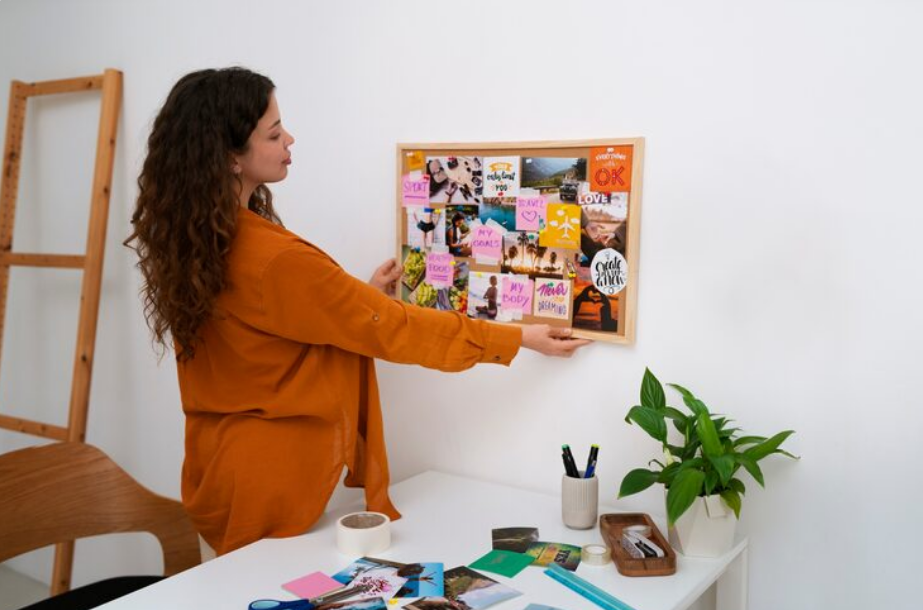
A gallery wall can turn an ordinary blank surface into one of the most interesting features in a home. Instead of relying on a single oversized piece of artwork, gallery walls combine paintings, photographs, prints, illustrations, and decorative objects to create a personalized display.
The most successful gallery walls rarely look accidental. Even arrangements that appear relaxed and spontaneous usually have some underlying structure. Designers think carefully about scale, spacing, color, frame styles, and the relationship between individual pieces.
Fortunately, you do not need professional interior design experience to achieve the same effect. With a little planning, you can create a gallery wall that feels balanced, intentional, and completely personal.
Start With a Clear Vision
Before buying frames or putting nails in the wall, decide what kind of atmosphere you want the gallery to create.
Some gallery walls are sophisticated and minimal, featuring black-and-white photographs in matching frames. Others are colorful and eclectic, combining vintage illustrations, travel photographs, typography, abstract art, and personal memories.
Consider the overall design style of the room. A modern interior may look best with simple frames and graphic artwork, while a traditional room can support ornate frames, botanical prints, landscapes, and antique-inspired pieces.
You do not need every artwork to match perfectly. Instead, look for one or two connecting elements that make the collection feel related.
Choose Art That Means Something
One of the biggest advantages of a gallery wall is that it can tell a story.
Instead of choosing artwork simply because the colors match your sofa, include pieces that reflect your interests, experiences, and personality.
You might display family photographs, travel memories, illustrations from favorite cities, vintage postcards, children’s artwork, meaningful quotes, architectural drawings, or handmade pieces.
Professional designers often mix expensive artwork with inexpensive finds. A framed postcard can look just as interesting as a limited-edition print when it is placed thoughtfully within the arrangement.
The goal is not necessarily to create a collection of valuable art. It is to create a collection that feels visually interesting and meaningful.
Create a Consistent Color Story
Color is one of the easiest ways to connect different types of artwork.
Choose a loose palette that appears throughout the gallery. For example, your collection might feature warm earth tones, soft neutrals, blues and greens, or bold primary colors.
The colors do not have to appear in every piece. Even repeating certain shades in several artworks can create enough visual connection.
Another option is to use black-and-white artwork while allowing the frames to provide variation.
If your room already contains strong colors, consider repeating some of them within the gallery wall. This helps the artwork feel connected to the rest of the interior rather than appearing as a completely separate design feature.
Mix Different Types of Artwork
A designer-inspired gallery wall often becomes more interesting when different artistic styles are combined.
You might mix:
- Photography
- Abstract paintings
- Line drawings
- Typography
- Vintage illustrations
- Botanical prints
- Architectural sketches
- Maps
- Personal photographs
Decorative objects can also become part of the arrangement. Small mirrors, woven pieces, ceramic plates, sculptural objects, or framed textiles can add texture and dimension.
The key is maintaining enough visual consistency that the collection still feels unified.
Decide Between Matching and Mixed Frames
Frames significantly influence the personality of a gallery wall.
Matching frames create a clean, organized appearance. This approach works especially well with photography collections, minimalist interiors, and symmetrical layouts.
Mixed frames produce a more relaxed and collected feeling. You might combine wood, black, white, brass, or vintage-inspired frames.
However, completely random frames can sometimes make the wall feel chaotic.
A useful designer strategy is to limit the collection to two or three frame finishes. For example, you could combine black frames with natural wood and a few brass accents.
This creates variety while maintaining consistency.
Use Different Sizes for Visual Interest
A gallery wall made entirely from identical frames can work beautifully, particularly when arranged in a grid. However, an eclectic gallery usually looks more dynamic when multiple sizes are used.
Start with one or two larger pieces that will act as visual anchors.
Then surround them with medium and smaller artworks.
Large pieces prevent the arrangement from looking overly busy, while smaller pieces help fill gaps and create rhythm.
Try to avoid placing every large frame on one side of the wall. Distribute visual weight throughout the composition.
Plan the Layout Before Hanging
One of the most important gallery wall tips is simple: do not start hammering nails immediately.
Arrange the artwork on the floor first.
Experiment with different layouts until the overall composition feels balanced.
Another useful method is to trace each frame onto kraft paper or newspaper. Cut out the shapes and temporarily attach them to the wall using painter’s tape.
This allows you to test the arrangement without making unnecessary holes.
Take a few steps back and look at the composition from different parts of the room before finalizing the layout.
Maintain Consistent Spacing
Even eclectic gallery walls benefit from consistent spacing.
Generally, leaving approximately two to four inches between frames works well for many arrangements.
Closer spacing creates a dense, dramatic display, while wider spacing feels lighter and more relaxed.
The exact measurement matters less than consistency.
When some frames are extremely close together while others are separated by large gaps, the arrangement can appear unbalanced.
Think of the artwork as one large composition rather than dozens of individual pieces.
Find the Right Center Point
Gallery walls are sometimes hung too high.
As a general guideline, the center of the overall arrangement should sit close to average eye level.
When placing a gallery wall above furniture such as a sofa, console, or bed, consider the relationship between the artwork and the furniture underneath it.
Avoid leaving an excessive amount of blank space between them.
The gallery should visually connect with the furniture, creating one unified design area.
Use an Invisible Shape
A helpful designer technique is to imagine an invisible rectangle surrounding the entire gallery wall.
Even if the individual frames have different shapes and sizes, try to keep the overall arrangement reasonably contained within this imaginary boundary.
This prevents pieces from drifting too far away from the main composition.
Alternatively, some designers create arrangements around an invisible central line. Frames extend above and below that line while maintaining visual balance.
These subtle structural techniques help an eclectic gallery appear intentional.
Try a Symmetrical Grid for a Clean Look
If you prefer order and simplicity, consider a grid layout.
Use frames of the same size and arrange them with equal spacing.
Grid galleries work particularly well with:
- Family photography
- Travel photographs
- Botanical prints
- Architectural photography
- Minimalist illustrations
Because the layout itself is highly structured, the images can provide the visual variety.
Careful measuring is especially important with grid arrangements because even small alignment differences can become noticeable.
Build an Eclectic Salon-Style Gallery
For a more artistic and collected appearance, consider a salon-style arrangement.
This approach uses artworks of different sizes and orientations placed relatively close together.
Begin with the largest piece near the center and gradually build outward.
Avoid creating perfectly straight edges around the entire gallery. Slight variation helps the arrangement feel natural.
However, periodically step back to make sure one area is not becoming visually heavier than another.
Consider Negative Space
Not every section of the wall needs artwork.
Empty space gives the eye somewhere to rest.
If your gallery wall contains many detailed or colorful pieces, slightly wider spacing can prevent the arrangement from becoming overwhelming.
Similarly, the surrounding wall should have enough breathing room.
A gallery that stretches too close to ceilings, corners, windows, or nearby furniture can feel crowded.
Negative space is an important part of the composition.
Use Mats to Elevate Affordable Art
Matting can dramatically improve the appearance of inexpensive prints and photographs.
A generous white or cream mat creates breathing room between the artwork and the frame, giving the piece a polished gallery-like presentation.
You can also use colored mats for a more playful look.
When mixing frames, repeating similar mat colors can help visually unify the collection.
This simple technique can make even inexpensive printed artwork feel professionally presented.
Introduce Personal Photography Carefully
Personal photographs can make a gallery wall more meaningful, but consider editing the collection rather than displaying every favorite picture.
Choose photographs with similar visual qualities.
You might use all black-and-white images or photographs that share similar lighting, tones, or subjects.
Travel photographs are particularly effective because they can add both personal memories and artistic interest.
Printing photographs in consistent styles helps them blend naturally with paintings and illustrations.
Think Beyond the Living Room
Gallery walls can work throughout the home.
A staircase is a classic location because artwork can follow the upward movement of the steps.
Hallways are another excellent option, particularly when they lack architectural features.
Smaller gallery arrangements can also work beautifully in bedrooms, home offices, dining areas, and even kitchens.
You can adapt the scale and style of the gallery to suit each space.
Allow the Collection to Evolve
A gallery wall does not have to be completed in one afternoon.
In fact, some of the most interesting collections develop slowly.
Start with a few pieces you genuinely love and add new artwork over time.
Perhaps you find a print while traveling, inherit an old photograph, purchase artwork from a local artist, or discover a vintage illustration.
An evolving gallery wall can become a visual record of your experiences.
Leaving a little room for future additions can make the collection feel even more personal.
Avoid Overthinking Perfection
A gallery wall should feel intentional, but it does not have to be mathematically perfect.
Small differences in frame styles, sizes, and alignment often contribute to the charm of the arrangement.
If everything matches perfectly, the result may feel more like a showroom than a personal home.
Allow your personality to influence the final display.
The most memorable gallery walls usually combine thoughtful design principles with unexpected personal details.
Final Thoughts
Creating a designer-inspired gallery wall is less about following strict rules and more about understanding balance. Choose artwork that speaks to you, establish a loose visual connection between pieces, experiment with scale, maintain thoughtful spacing, and plan the layout before installation.
Whether you prefer an orderly grid or an eclectic salon-style arrangement, the finished gallery should feel like a natural extension of your home and personality.
A blank wall offers an opportunity to tell a story. With the right combination of artwork, frames, photographs, and personal details, it can become one of the most distinctive elements in the entire room.
Read More : Micro-Adventures: Finding Exploration Close to Home