
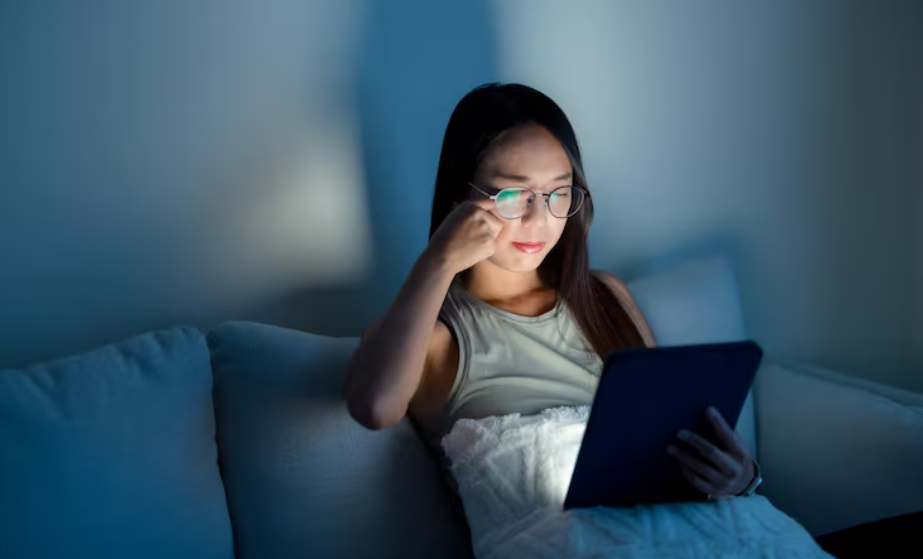
Screens have become part of nearly every moment of modern life. People use smartphones to check messages in the morning, computers throughout the workday, televisions for evening entertainment, and tablets for reading before bed. While these devices offer convenience, information, and entertainment, excessive screen exposure at night may interfere with one of the body’s most important functions: sleep.
One major reason is blue light. This type of visible light is naturally present in daylight, but it is also emitted by digital screens and many artificial lighting sources. When blue light reaches the eyes during the evening, it can influence the body’s internal clock and make falling asleep more difficult.
Understanding how screens affect sleep can help people build healthier nighttime habits without necessarily giving up technology altogether.
What Is Blue Light?
Visible light contains different wavelengths, ranging from longer red wavelengths to shorter blue wavelengths. Blue light is generally associated with higher-energy wavelengths in the visible spectrum.
During the daytime, exposure to natural blue-rich light plays a useful role. It helps promote alertness and supports the body’s circadian rhythm, the internal system that helps regulate periods of wakefulness and sleep.
Problems can arise when strong light exposure continues late into the evening. The brain normally interprets darkness as a signal that nighttime has arrived. Bright screens can send a conflicting signal that encourages the body to remain more alert.
The Connection Between Blue Light and Melatonin
Melatonin is a hormone involved in regulating the sleep-wake cycle. Levels usually begin increasing in the evening as the environment becomes darker.
Exposure to light at night can delay or reduce the body’s nighttime melatonin response. Blue-rich light is particularly effective at influencing the biological systems involved in circadian timing.
This does not mean that looking at a phone for a few minutes automatically causes severe sleep problems. The effect depends on factors such as screen brightness, viewing distance, length of exposure, time of night, and individual sensitivity.
However, spending long periods using bright screens immediately before bedtime may make it harder for the body to transition naturally into sleep.
Screens Keep the Brain Mentally Active
Light is only part of the problem. What people do on their devices can also delay sleep.
Social media, video games, streaming platforms, work emails, news updates, and short-form videos are designed to hold attention. Even after the screen is turned off, the mind may remain stimulated.
A person planning to watch one short video may suddenly realize that 45 minutes have passed. Someone checking a work email may begin thinking about deadlines. Competitive gaming can increase excitement, while emotionally intense social media content may make relaxation difficult.
In this way, screens can affect sleep both biologically and behaviorally.
Bedtime Procrastination and the Endless Scroll
Digital technology has made bedtime procrastination increasingly common. Instead of going to sleep when tired, people continue scrolling because entertainment is always available.
There is no natural stopping point on many platforms. Social feeds continuously refresh, streaming services automatically play the next episode, and recommendation systems constantly provide more content.
Ten minutes of casual browsing can easily become an hour.
This matters because even when screen exposure itself has only a moderate effect, simply staying awake longer reduces total sleep time. A person who needs seven or eight hours of rest may receive only five or six because of late-night phone use.
How Poor Sleep Can Affect Daily Life
Sleep is essential for physical recovery, memory, concentration, emotional regulation, and overall well-being.
After an occasional poor night’s sleep, someone may experience fatigue, irritability, slower thinking, or difficulty concentrating. When inadequate sleep becomes frequent, the effects can become more disruptive.
Poor sleep habits may contribute to reduced productivity, difficulty learning, impaired decision-making, and lower daytime energy.
The situation can also become cyclical. Someone who feels exhausted during the day may rely heavily on caffeine, nap late in the afternoon, and then struggle to fall asleep again at night.
Night Mode Can Help, but It Is Not a Complete Solution
Many devices now include settings called Night Shift, Night Light, Eye Comfort, or similar names. These features make the screen appear warmer by reducing some blue wavelengths.
Using them in the evening may be helpful, particularly when combined with lower screen brightness.
However, night mode does not remove all of the problems associated with nighttime device use. A warmer screen can still be bright, and stimulating content can still keep the brain active.
Watching exciting videos for two hours with night mode enabled may still delay bedtime considerably.
Screen filters should therefore be viewed as one helpful tool rather than a complete solution.
Create a Screen-Free Wind-Down Period
One practical approach is to reduce screen use before bedtime.
Instead of moving directly from a laptop or smartphone into bed, try creating a transition period of approximately 30 to 60 minutes.
Activities during this period could include reading a printed book, preparing clothes for the following day, stretching gently, journaling, listening to relaxing audio, or having a quiet conversation.
The objective is not simply to avoid blue light. It is to give the mind and body a consistent signal that the active part of the day is ending.
Keep the Phone Away From the Bed
For many people, the biggest source of nighttime disruption is the smartphone sitting beside the pillow.
A notification sound can interrupt sleep, while simply knowing the phone is nearby can make checking it tempting.
Consider placing the device on a desk, shelf, or charger away from the bed. Some people even keep their phones outside the bedroom and use a traditional alarm clock instead.
If keeping the phone nearby is necessary, activating Do Not Disturb or Sleep Mode can reduce unnecessary interruptions.
Reduce Evening Brightness
The intensity of light matters as well as its color.
During the evening, reducing screen brightness and avoiding extremely bright room lighting can create a more sleep-friendly environment.
Automatic brightness settings may still leave the screen brighter than necessary, particularly in a dark room. Manually lowering brightness to a comfortable level can reduce nighttime light exposure.
Warmer household lighting can also help create a calmer evening atmosphere.
Protect Your Sleep Schedule
One of the strongest ways to support healthy sleep is maintaining relatively consistent sleeping and waking times.
Going to bed at dramatically different times every night can make it harder for the body’s internal clock to maintain a predictable rhythm.
Screens often contribute to schedule changes because people continue watching, gaming, working, or scrolling long after they originally planned to sleep.
Setting a regular digital cutoff time can make bedtime more consistent.
For example, someone planning to sleep at 11:00 p.m. might stop recreational screen use around 10:00 or 10:30 p.m.
Technology Does Not Have to Be the Enemy
Digital devices are not inherently harmful to sleep. The main issue is how and when they are used.
Someone who uses a computer throughout the afternoon but puts devices away well before bedtime may experience little difficulty. Another person who spends several hours scrolling in bed every night may find that technology significantly interferes with sleep.
Creating boundaries is often more realistic than completely avoiding screens.
Small changes such as lowering brightness, enabling night mode, silencing notifications, avoiding stimulating content late at night, and establishing a screen-free wind-down routine can collectively make a meaningful difference.
Final Thoughts
Blue light is only one part of the complicated relationship between screens and sleep. Evening light exposure can influence the body’s circadian system, while digital entertainment can keep the mind active and encourage people to stay awake much longer than intended.
The most effective strategy is usually not abandoning technology but using it more deliberately.
Reducing screen exposure before bed, creating a relaxing nighttime routine, keeping devices away from the pillow, and maintaining consistent sleep hours can help restore the natural separation between daytime activity and nighttime rest.
Your phone will still be there in the morning. Giving your brain a quieter final hour of the day may make it much easier to wake up feeling genuinely refreshed.
Read More : Zone 2 Cardio: The Low-Intensity Workout With Big Payoffs