
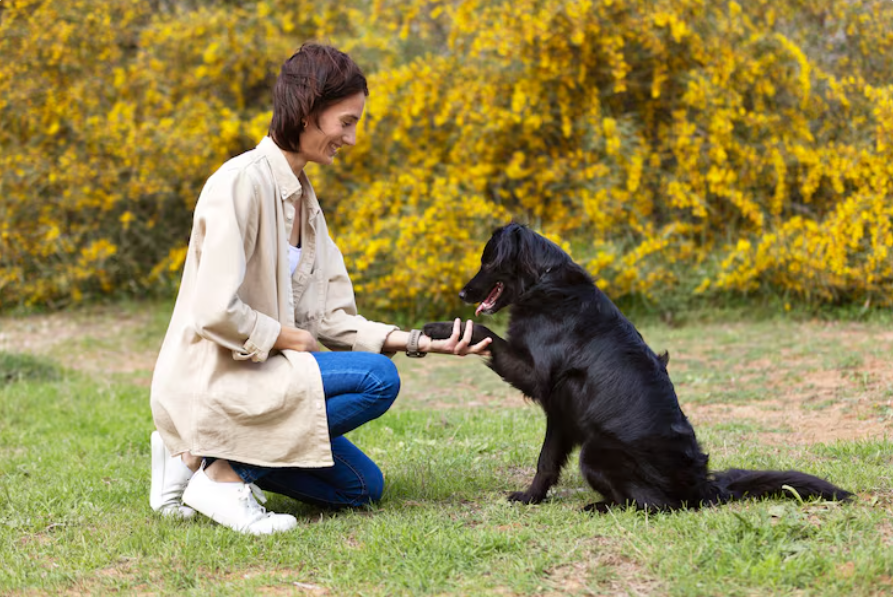
Training a dog can be one of the most rewarding parts of pet ownership, but it can also become frustrating when communication is unclear. Dogs do not naturally understand words such as “sit,” “stay,” or “come.” They learn through associations, repetition, timing, and consequences.
Clicker training offers a simple way to make that communication clearer. Instead of relying only on verbal praise, the method uses a small handheld device that produces a distinct clicking sound. That sound marks the exact moment the dog performs the desired behavior.
Because the technique is based on well-established principles of learning and positive reinforcement, clicker training has become popular among pet owners, professional trainers, and animal behavior specialists.
What Is Clicker Training?
Clicker training is a form of reward-based training. A clicker is a small device that makes a quick, consistent sound when pressed.
The click itself is not the reward. Instead, it acts as a marker that tells the dog, “That was exactly what I wanted.” A reward, usually a small food treat, follows immediately.
For example, if you are teaching your dog to sit, you click at the precise moment the dog’s bottom touches the ground and then provide a treat.
Over time, the dog learns that the clicking sound predicts something positive. This makes it easier for the animal to understand which actions earn rewards.
The Science Behind Clicker Training
Clicker training is closely connected to operant conditioning, a learning process in which behavior is influenced by its consequences.
When a dog performs a desired action and receives something enjoyable afterward, such as food, play, or praise, the dog becomes more likely to repeat that action.
The clicker improves this process by providing precise timing.
Imagine rewarding a dog several seconds after it sits. By that point, the dog may have stood up, looked away, or moved toward you. It may not understand which behavior earned the reward.
A click can mark the correct behavior almost instantly.
The clicker also becomes what behavior specialists call a conditioned reinforcer. Once a dog learns that clicking predicts a reward, the sound itself gains meaning.
Step 1: Teach Your Dog What the Click Means
Before using a clicker to teach commands, your dog needs to understand the association between the sound and a reward.
Begin in a quiet environment with several small treats.
Click the device once and immediately give your dog a treat. Repeat the process several times.
At this stage, your dog does not need to perform any particular behavior. You are simply teaching the connection:
Click = reward is coming.
After enough repetitions, many dogs begin looking toward their owner as soon as they hear the click.
Step 2: Start With a Simple Behavior
Once your dog understands the clicker, begin with an easy behavior such as sitting.
Hold a treat slightly above your dog’s nose and slowly move it backward. Many dogs naturally lower their rear end while following the treat.
The instant your dog sits, click and provide the reward.
Timing matters. Try to click while the behavior is actually happening rather than several seconds afterward.
Repeat the exercise in short sessions.
Step 3: Add a Verbal Cue
Initially, your dog is learning the action itself. Once the behavior becomes consistent, you can introduce a verbal command.
For example, say “sit” just before your dog performs the sitting behavior.
Then click and reward when the dog successfully completes the action.
With repetition, the dog begins associating the spoken word with the behavior.
Eventually, the hand signal or food lure can gradually be removed.
Shaping More Complex Behaviors
One of the strongest advantages of clicker training is the ability to teach complicated behaviors through a process known as shaping.
Shaping means rewarding small steps toward the final behavior.
Suppose you want to teach your dog to enter a crate voluntarily. Instead of waiting until the dog walks completely inside, you can reward progress gradually.
You might click when your dog:
- Looks toward the crate
- Walks closer to it
- Touches the entrance
- Places one paw inside
- Places several paws inside
- Enters the crate completely
Breaking the task into smaller steps can reduce confusion and make difficult behaviors easier to learn.
Keep Training Sessions Short
Dogs often learn more effectively through short, focused sessions rather than long training periods.
Five to ten minutes can be enough for many exercises.
Ending a session while your dog is still interested can help maintain enthusiasm for future training.
Training can also be incorporated into daily routines. A few short practice sessions before meals, walks, or playtime can produce steady improvement.
Choose Rewards Your Dog Values
Food treats are commonly used because they are easy to deliver quickly, but not every dog is motivated in the same way.
Some dogs may prefer:
- Small pieces of food
- A favorite toy
- A short game of tug
- Verbal praise
- Access to an enjoyable activity
The reward should be valuable enough to motivate the dog without distracting it from the training session.
For frequent food rewards, small treats are usually better than large ones.
Avoid Using the Clicker as a Command
One common mistake is clicking repeatedly to get a dog’s attention.
The click should not mean “come here” or “look at me.”
Its primary purpose is to mark a correct behavior.
Using the sound randomly may weaken its meaning and make training less precise.
Ideally, every click should be followed by a reward, particularly while the dog is learning.
Do Not Punish Mistakes
Clicker training works best when the focus remains on rewarding correct behavior rather than punishing incorrect behavior.
If the dog does not perform the desired action, simply reset the situation and try again.
Sometimes a failed attempt means the training step is too difficult.
Breaking the task into smaller stages can help the dog succeed.
A calm training environment also encourages experimentation. Dogs that are comfortable trying new behaviors often learn faster because they are not worried about being punished for mistakes.
Benefits Beyond Basic Commands
Clicker training can be used for much more than teaching a dog to sit or stay.
It can help with:
- Recall training
- Loose-leash walking
- Crate training
- Trick training
- Grooming cooperation
- Handling exercises
- Confidence building
- Agility training
For nervous dogs, carefully structured positive training may also help build confidence by giving the animal predictable ways to earn rewards.
When Can You Stop Using the Clicker?
The clicker does not need to be used forever.
Once a behavior becomes reliable, rewards can gradually become less frequent.
For example, after your dog consistently responds to the “sit” command, you may begin rewarding only some successful responses rather than every single one.
Praise, play, and everyday privileges can eventually replace many food rewards.
The clicker can then be reserved for teaching new behaviors or improving existing ones.
Common Clicker Training Mistakes
Successful training depends heavily on consistency.
Common problems include clicking too late, giving unclear commands, expecting progress too quickly, or making training sessions too long.
Another mistake is increasing difficulty too rapidly. Dogs often perform well in quiet rooms but struggle when distractions are introduced.
Training should gradually move from easy environments to more challenging ones.
Final Thoughts
Clicker training provides dogs with clear information about which behaviors lead to positive outcomes. Its effectiveness comes from accurate timing, consistent reinforcement, and the learning principles that help animals connect actions with consequences.
The method does not require complicated equipment or long training sessions. A simple clicker, small rewards, patience, and consistent practice can be enough to teach everything from basic manners to advanced tricks.
Most importantly, clicker training encourages cooperation rather than confrontation. When dogs understand exactly what earns a reward, training often becomes easier, more enjoyable, and more productive for both the dog and the owner.
Read More : The Art of Engine Sound: Why EVs Are Faking Their Roar
Conversation