
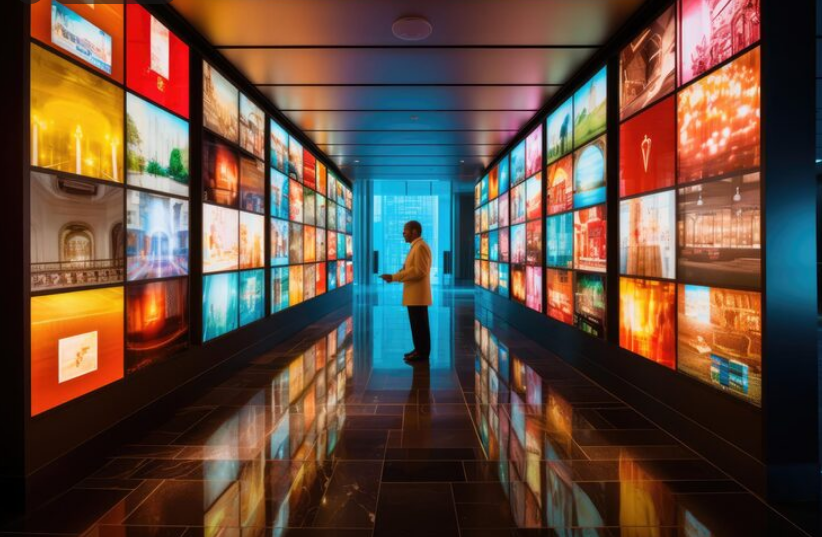
Television has traditionally been a passive form of entertainment. Viewers sit back, watch a story unfold, and accept whatever ending the writers have created. Interactive television is changing that relationship. Instead of simply watching characters make decisions, audiences are increasingly being invited to make some of those decisions themselves.
This new format turns television into a more participatory experience. At key moments, viewers may be asked to select what a character should say, where they should go, or how they should respond to a difficult situation. Those choices can influence future scenes and, in some cases, completely change the ending.
What Is Interactive TV?
Interactive TV combines traditional television storytelling with elements commonly associated with video games. A show may pause briefly and present the viewer with two or more options. After a choice is made using a remote control, smartphone, or streaming device, the story continues along a particular path.
Some interactive programs use only a few simple decisions, while others contain complicated branching storylines with numerous possible outcomes.
This means two viewers can watch the same program and experience very different versions of the story.
One person might help the main character succeed, while another choice could lead the character toward failure, danger, or an entirely different conclusion.
Why Interactive Storytelling Is Growing
Streaming platforms have made interactive entertainment much easier to deliver. Unlike traditional broadcast television, streaming services can instantly load different scenes depending on the viewer’s choices.
Modern audiences are also comfortable with digital interaction. People regularly participate in polls, play mobile games, comment on social media, and customize their online experiences. Interactive television fits naturally into this environment because it gives viewers greater control over the entertainment they consume.
Instead of asking, “What will the character do next?” audiences can ask, “What should I make the character do next?”
That small difference can dramatically increase involvement in the story.
Viewers Become Part of the Story
One of the greatest strengths of interactive TV is immersion.
Traditional television creates emotional connections through characters, dialogue, and storytelling. Interactive television adds another layer by giving viewers responsibility for important decisions.
Imagine watching a mystery where you decide which suspect the detective should investigate. Choosing the wrong person could lead the investigation in a completely different direction.
In an adventure story, viewers might decide whether a character enters a dangerous building or finds another route.
Because viewers participate in these decisions, the consequences can feel more personal.
The audience is no longer watching someone else make a mistake. The viewer may have caused the mistake.
Multiple Endings Encourage Repeat Viewing
Interactive shows can also increase replay value.
A traditional movie usually has one ending. Once viewers know what happens, there may be less motivation to watch the entire story again immediately.
Interactive programs can contain several endings, hidden scenes, alternative storylines, and different character outcomes.
After completing one version of the story, viewers may return to discover what would have happened if they had made different decisions.
This creates an entertainment experience that feels somewhere between television and gaming.
Instead of watching once, audiences may explore the program several times.
New Opportunities for Writers
Interactive television creates exciting possibilities for screenwriters, but it also introduces significant challenges.
Traditional storytelling follows a relatively straightforward structure. Writers develop characters, introduce conflict, build toward a climax, and eventually reach a conclusion.
Interactive storytelling may require several versions of these events.
If viewers are allowed to make five important choices, writers must consider how each choice affects later scenes. Characters must behave consistently even when the story follows different paths.
Poorly designed choices can also make the experience feel meaningless. If every option leads to exactly the same outcome, viewers may feel that their decisions do not matter.
Successful interactive storytelling therefore requires careful planning. Each choice should feel meaningful while still supporting a coherent narrative.
Interactive TV and Video Games Are Moving Closer Together
The distinction between television and video games is becoming less obvious.
Modern games often feature cinematic storytelling, professional actors, detailed scripts, and emotional character development. At the same time, interactive television is borrowing decision-making mechanics from games.
The two formats are beginning to overlap.
However, interactive television usually remains simpler than traditional gaming. Viewers may not control character movement or complete complicated challenges. Instead, the interaction focuses primarily on storytelling decisions.
This approach makes interactive programs accessible to audiences who enjoy storytelling but may not consider themselves gamers.
Children’s Entertainment Can Benefit Too
Interactive television is especially promising for children’s programming.
Young viewers can be encouraged to solve puzzles, choose directions, identify objects, answer educational questions, or help characters make responsible decisions.
This can transform screen time from passive viewing into a more active learning experience.
Educational interactive programs could potentially help children practice mathematics, language skills, problem-solving, and logical thinking while following an entertaining story.
However, successful educational content must balance learning with entertainment. If the experience feels too much like homework, children may quickly lose interest.
Challenges Facing Interactive TV
Despite its potential, interactive television is not suitable for every story.
Constant choices can interrupt emotional scenes and reduce the natural flow of a narrative. Some viewers simply want to relax and enjoy a program without making decisions every few minutes.
Production can also become more expensive.
Multiple story paths require additional scripts, scenes, acting, editing, testing, and technical development. Producers may need to create content that many viewers will never see during their first viewing.
Another challenge is maintaining meaningful consequences. Too many options can make a story confusing, while too few can make the interaction feel unnecessary.
Finding the right balance is essential.
Could Interactive TV Become Personalized?
The future of interactive television could move beyond simple multiple-choice decisions.
Artificial intelligence and advanced streaming technology may eventually allow stories to adapt dynamically to individual viewers.
For example, a program could adjust its difficulty, pacing, characters, or storyline depending on previous choices. Viewers who enjoy mystery could receive more investigative scenes, while viewers who prefer action could experience faster and more dramatic sequences.
Stories could potentially become highly personalized entertainment experiences.
This raises interesting creative questions. If every viewer receives a slightly different story, television may become less about watching the same program and more about experiencing a unique version of it.
A New Relationship Between Viewers and Entertainment
Interactive television represents a significant change in how stories can be experienced.
For decades, audiences followed stories created entirely by writers and directors. Interactive formats invite viewers into the creative process by allowing them to influence what happens next.
Traditional television is unlikely to disappear. Many people will always prefer carefully crafted stories with one definitive narrative.
But interactive TV adds another possibility.
Instead of simply asking viewers to watch a story, it asks them to participate in it.
Conclusion
The rise of interactive television demonstrates how rapidly entertainment is evolving. Streaming technology, gaming culture, and changing audience expectations are creating new ways for viewers to experience stories.
Shows where audiences choose the ending can provide greater engagement, multiple storylines, stronger replay value, and a sense of personal involvement.
As technology continues to improve, interactive storytelling may become even more sophisticated. Future viewers may not simply watch characters explore fictional worlds—they may help determine what those worlds become.
Television is no longer limited to telling audiences a story. Increasingly, it can ask them to help create one.
Read more : Aquarium Setup for Beginners: A Guide to Happy Fish
Conversation