
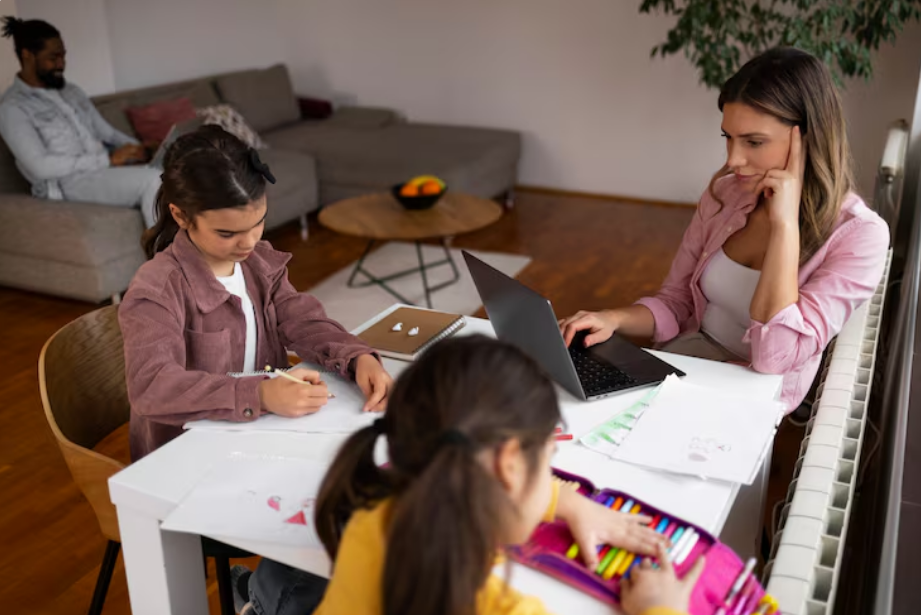
For generations, the traditional classroom has followed a familiar pattern: students attend lessons at school, listen to a teacher explain new material, and then complete assignments at home. The flipped classroom turns that model around. Instead of spending most classroom time listening to lectures, students review instructional material at home and use class time for practice, discussion, problem-solving, and collaboration.
This approach has gained attention because it shifts the classroom from a primarily passive learning environment to a more interactive one. Rather than simply receiving information, students have more opportunities to apply what they have learned while a teacher is available to guide them.
What Is a Flipped Classroom?
A flipped classroom is an instructional model in which students are introduced to new concepts before attending class. This preparation may involve watching recorded video lessons, reading digital materials, listening to audio explanations, studying presentations, or completing short online activities.
When students arrive in class, the teacher does not need to spend the entire lesson delivering the same lecture. Instead, classroom time can focus on activities that require deeper thinking.
Students might solve mathematics problems, perform science experiments, participate in group discussions, analyze case studies, work on projects, or ask questions about concepts they found difficult.
In simple terms, the lecture becomes the homework, while much of the traditional homework becomes classroom work.
Why Flip the Traditional Learning Model?
One of the biggest limitations of traditional homework is that students often face their most difficult questions when their teacher is unavailable.
A student may understand a lesson while sitting in class but become confused later when attempting an assignment independently. Without immediate support, that student may become frustrated or simply skip the problem.
The flipped model changes this situation. Students encounter basic explanations at home, where they can review the material at their own pace. They then complete more challenging activities during class, where teachers and classmates can provide assistance.
This allows teachers to spend more time helping students understand how to use information rather than simply presenting it.
Students Can Learn at Their Own Pace
Recorded lessons provide a major advantage that traditional lectures cannot always offer: control over the pace of learning.
During a live lecture, the class generally moves forward at the same speed. Students who understand the topic quickly may become bored, while those who need more time may struggle to keep up.
With recorded content, students can pause, rewind, replay, or review sections whenever necessary. A difficult explanation can be watched several times, while familiar material can be completed more quickly.
This flexibility can make learning more accessible to students with different learning speeds and study habits.
Classroom Time Becomes More Interactive
The flipped classroom can significantly change the atmosphere of a lesson.
Instead of a teacher speaking for most of the class period, students become active participants. They may work together on projects, debate ideas, solve real-world problems, or complete practical exercises.
For example, students studying economics might watch a short lesson about supply and demand before class. During the lesson, they could analyze actual business scenarios and discuss how changes in price affect consumer behavior.
Similarly, science students could learn the theory behind an experiment at home and then spend classroom time conducting the experiment.
This approach can help connect theoretical knowledge with practical application.
The Teacher’s Role Also Changes
Flipped learning does not reduce the importance of teachers. In many cases, it makes their role more personalized.
Rather than spending most of the lesson standing in front of the classroom delivering information, teachers can move around the room, observe student progress, answer questions, and provide individual guidance.
This can help teachers identify misunderstandings more quickly.
A student who appears to understand a topic during a lecture may struggle when applying it. Classroom activities make these difficulties easier to notice, allowing teachers to provide support before students fall further behind.
Teachers also become facilitators who encourage discussion, critical thinking, and independent learning.
Encouraging Greater Student Responsibility
The flipped classroom requires students to take more responsibility for preparing before class.
If students do not watch the assigned lesson or review the required material, they may find classroom activities difficult. As a result, students gradually learn that preparation is an important part of participating successfully.
This can help develop time-management and independent-learning skills.
However, teachers may need to introduce the system gradually. Short quizzes, reflection questions, or simple preparation tasks can encourage students to complete the assigned material without making the process overwhelming.
Technology Makes Flipped Learning Easier
Digital technology has played an important role in making flipped classrooms possible.
Teachers can upload lessons to learning platforms, school websites, or educational applications. Videos can include diagrams, demonstrations, subtitles, animations, and interactive questions.
Students may also use online discussion boards to ask questions before attending class.
Technology, however, should support learning rather than become the focus of the lesson. A flipped classroom does not require expensive equipment or highly produced videos. A simple presentation with clear explanations may be enough.
What matters most is whether students can access and understand the material.
Challenges of the Flipped Classroom
Despite its advantages, the flipped model is not perfect.
Access to technology can be one challenge. Some students may not have reliable internet connections, computers, tablets, or quiet places to study at home. Schools using flipped learning should therefore provide alternatives such as downloadable resources, printed materials, or access to school devices.
Student participation can also become an issue. The system depends on students completing preparation before class.
Teachers may also need significant preparation time when creating instructional videos and redesigning classroom activities.
Another concern is screen time. If every subject relies heavily on video lessons, students may spend too much time using digital devices. Flipped learning works best when technology is balanced with reading, discussion, practical work, and offline activities.
Not Every Lesson Needs to Be Flipped
A successful flipped classroom does not necessarily mean completely abandoning traditional teaching.
Some subjects or topics may still benefit from direct classroom instruction. Teachers may choose to flip only certain lessons where additional practice or discussion would be especially valuable.
For example, a mathematics teacher might provide introductory videos for complex equations but explain other concepts directly in class.
A blended approach gives teachers the flexibility to select the teaching method that best fits the lesson.
The Future of Flipped Learning
Education is increasingly moving toward flexible and student-centered learning. The flipped classroom fits naturally within this trend because it allows students to access information independently while making classroom time more focused on interaction.
Artificial intelligence, interactive learning platforms, digital simulations, and adaptive educational tools may make flipped learning even more personalized in the future.
Students could eventually receive customized materials before class based on their individual progress. Teachers could then use classroom sessions to address specific learning gaps.
However, technology alone will not determine whether flipped learning succeeds. Effective teaching, thoughtful lesson planning, student motivation, and equal access to learning resources remain essential.
Conclusion
The flipped classroom challenges the traditional idea that lectures belong in school and homework belongs at home. By moving introductory instruction outside the classroom and bringing practice, discussion, and problem-solving into it, the approach can create more opportunities for active learning.
Students gain greater control over how they review lessons, while teachers gain more time to provide individual support and encourage deeper understanding.
Although challenges such as technology access, preparation time, and student participation must be addressed, the flipped classroom offers an interesting alternative to traditional education.
Instead of asking students to complete the hardest part of learning alone at home, it allows them to tackle challenging work where guidance is readily available. That simple reversal can transform classroom time from a place where information is delivered into a place where knowledge is actively used.
Read more : Micro-Credentials: Are They Worth More Than a Degree?